
In the world of residential development, whether you’re leading the build, managing the property, or overseeing tenant improvements, ADA compliance isn’t optional—it’s baked into the regulations. And beyond the legal requirements, it has a direct impact on project risk, long-term value, and operational efficiency.
Too often, ADA considerations are treated as an afterthought—something to “fix at the end” or “get through” during inspections. But that mindset tends to be expensive. Compliance issues discovered late in the game mean change orders, delayed occupancy, and sometimes even retrofitting costs that could’ve been avoided with early planning.
Here’s what you need to know to stay ahead—and avoid costly mistakes.
What the ADA Actually Covers in Multifamily Projects
If you’re developing or managing market-rate apartments, you might assume the ADA doesn’t apply. That’s only partially true.
While the ADA doesn’t govern individual residential units in most private developments, it absolutely applies to all public and common-use spaces, including:
-
Leasing offices
-
Clubhouses and lounges
-
Fitness centers
-
Mailrooms and package lockers
-
Parking lots and loading zones
-
Sidewalks and pedestrian routes between amenities
-
Community restrooms
-
Pools, patios, and BBQ areas
-
Signage for room IDs and wayfinding
If a visitor, vendor, or prospective tenant can access the space, it needs to be accessible.
Why Compliance Matters for the Bottom Line
-
Reduce Legal Risk
The cost of non-compliance can be substantial. ADA lawsuits are common—and expensive. It’s not just the settlement; it’s the mandatory remediation, professional fees, and internal time lost dealing with a preventable problem. -
Faster Approvals and Fewer Delays
Cities and inspectors are paying closer attention to accessibility details. Clean, code-compliant documentation and build-outs can move your approvals along faster and reduce the chances of last-minute punch list items that slow occupancy. -
Broader Market Reach
Accessible spaces attract a wider range of tenants and visitors, including seniors, people with temporary injuries, or anyone accompanying someone with mobility needs. In an increasingly competitive rental market, that matters. -
Preserve Long-Term Asset Value
Properties that don’t meet ADA and Fair Housing standards are liabilities waiting to surface—especially during refinance, sale, or insurance review. ADA compliance adds to your property’s longevity and defensibility. -
Minimize Maintenance and Retrofit Costs
When accessibility is built into the original design, it’s more cost-effective than retrofitting. And if you’re remodeling, bringing a space up to ADA standards is required anyway—so it’s not a question of if, but how efficiently you get it done.
Common Pitfalls to Watch For
1. Incorrect Signage
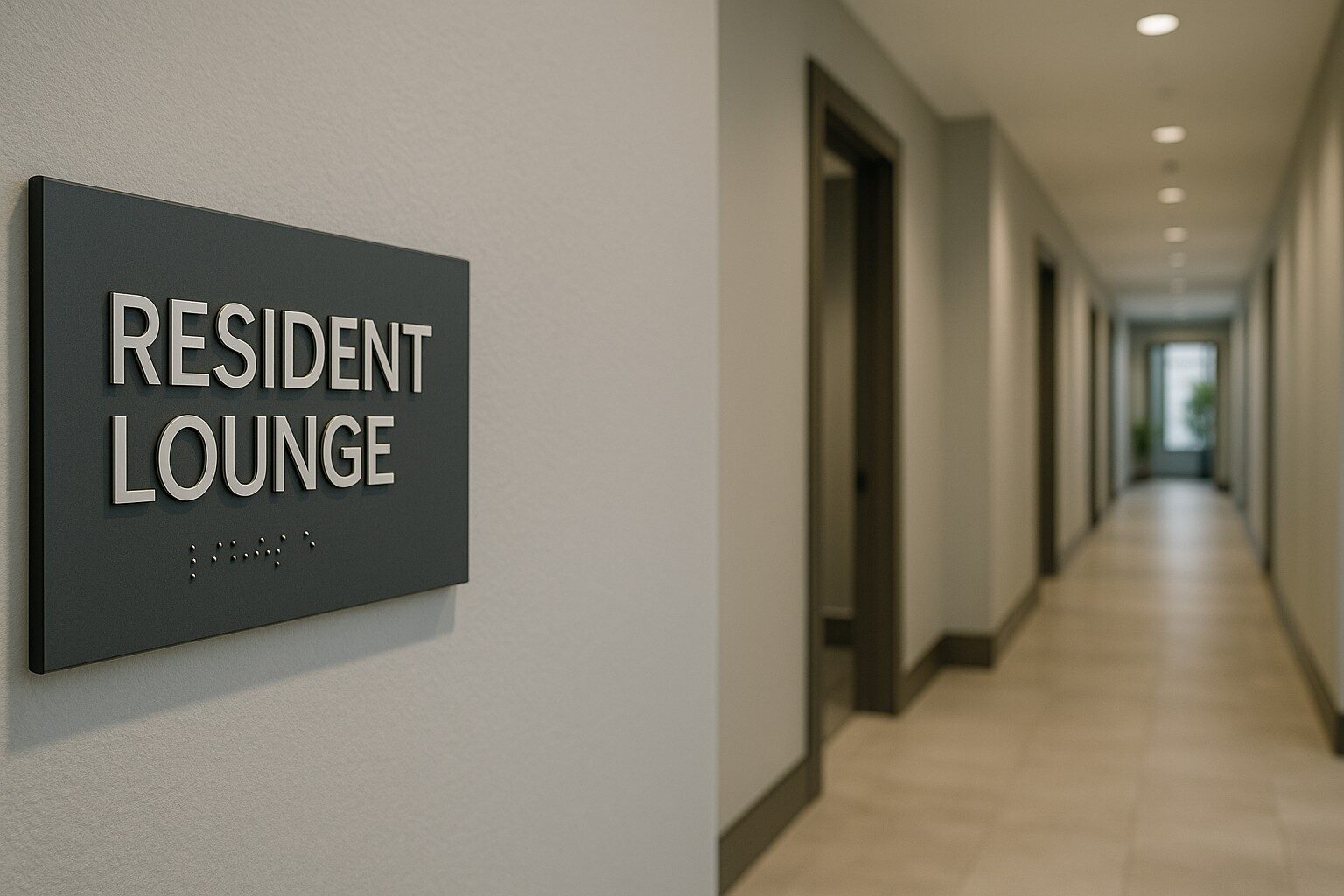
Room identification signs need tactile lettering, Grade 2 Braille, and proper mounting heights. These are not decorative pieces—they’re regulated components. Using off-the-shelf or poorly installed signage is a frequent cause of compliance failure.
2. Ramp and Path Issues
Even a slightly incorrect slope or uneven surface can trigger violations. Sidewalks, transitions, and amenity routes all need to meet precise standards for slope, width, and clearance.
3. Doorway Clearances and Handles
Too-narrow doors, high thresholds, or knobs instead of lever handles are still surprisingly common in clubhouse renovations and older leasing offices.
4. Unclear Parking Compliance
Accessible parking isn’t just about signage. Space size, access aisles, slope, and location all matter. A mismatch between building use and space count can flag you during inspections.
5. Renovations That Trigger Compliance
Updating finishes in a clubhouse or moving a door in a mailroom? Those upgrades might require the entire space to come into ADA compliance. It’s not always obvious—but it’s enforceable.
Best Practices for Staying Compliant (and Efficient)
-
Engage Consultants Early: Bringing in an accessibility consultant during schematic design can catch layout issues before they become expensive fixes.
-
Standardize Signage Across Projects: Partnering with a vendor who understands ADA requirements helps reduce approval hiccups and ensures consistency.
-
Coordinate with Civil and MEP Teams: Ramps, door operators, fixture heights, and turning radii all require tight coordination. Don’t silo ADA responsibility to just one team.
-
Train Property Staff: Maintenance and operations teams need to understand the functional aspects of accessibility—from keeping doorways clear to knowing what not to “fix” without checking regulations.
-
Audit Regularly: For existing properties, a proactive audit can identify small fixes before they become bigger problems. Think of it like preventive maintenance for compliance.
Final Word
ADA compliance isn’t a niche concern—it’s a core part of modern residential development. The developers and managers who treat it as a strategic investment, rather than an obligation, are the ones who avoid legal headaches, maintain asset value, and keep projects running smoothly.
Compliance doesn’t have to be complicated. It just has to be built into the process from the start. That’s not just smart—it’s business sense.